Wetlands are so important for local water quality, preventing erosion, and providing habitat for wildlife.
Unfortunately, Chocolay Township in Marquette County currently lacks protections against most development on inland wetlands. Citizens for a Safe & Clean Lake Superior (CSCLS) proposes that a wetland buffer of 25 feet should be adopted as part of the township’s Zoning Ordinance, in order to preserve wetlands from development. This would effectively prohibit any development on and within 25 feet of a wetland in Chocolay Township.
Please take action to help protect Chocolay Township’s wetlands by doing the following:
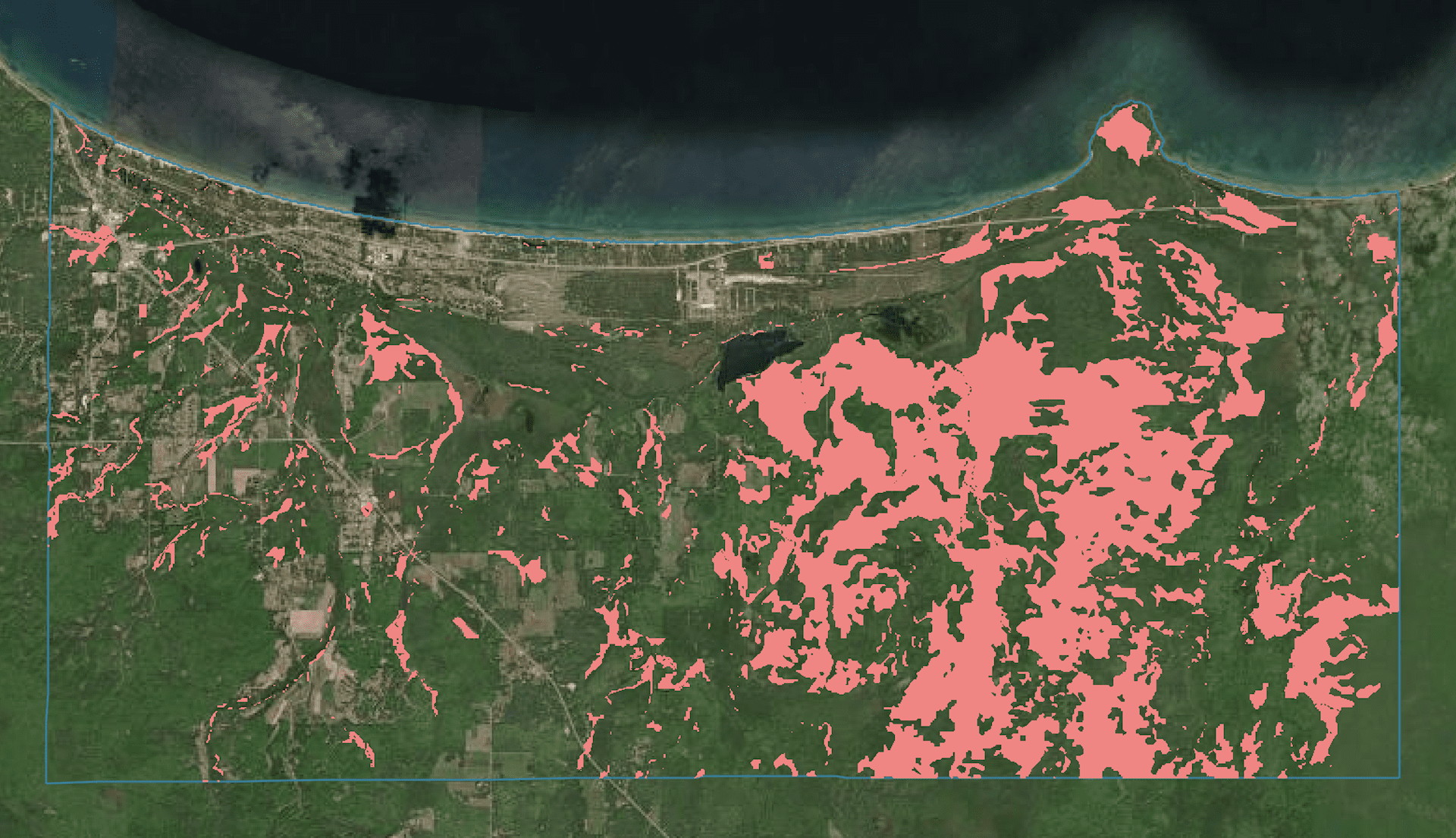
Wetlands in Chocolay Township have faced threats from efforts to drain and/or fill them for residential and commercial development, as well as agricultural and forestry activity. As a coastal community on Lake Superior, wetlands play an important role in keeping water clean and trapping pollutants before they reach the lake. Riparian flooding and erosion have long been issues in Chocolay Township, and wetland loss will only make these problems worse.
Chocolay Township lacks adequate protections for inland wetlands against most development. Impacts to these wetlands are primarily regulated through the township's Zoning Ordinance; which sets land-use requirements that developers, landowners, and residents must follow.
The Zoning Ordinance sets buffer protections for lakes, rivers, streams, and other water bodies—but wetlands are not included:
The Zoning Ordinance sets additional protections for the Lake Superior shoreline and sand dunes:
The only protections that the Zoning Ordinance sets for wetlands are for those in rural cluster development subdivisions:
Wetlands that are isolated from any other body of water and smaller than 5 acres are not regulated by the state of Michigan or the federal government. In Chocolay Township, there are minimal protections for these wetlands from being filled, drained, and built on. We believe that should change.
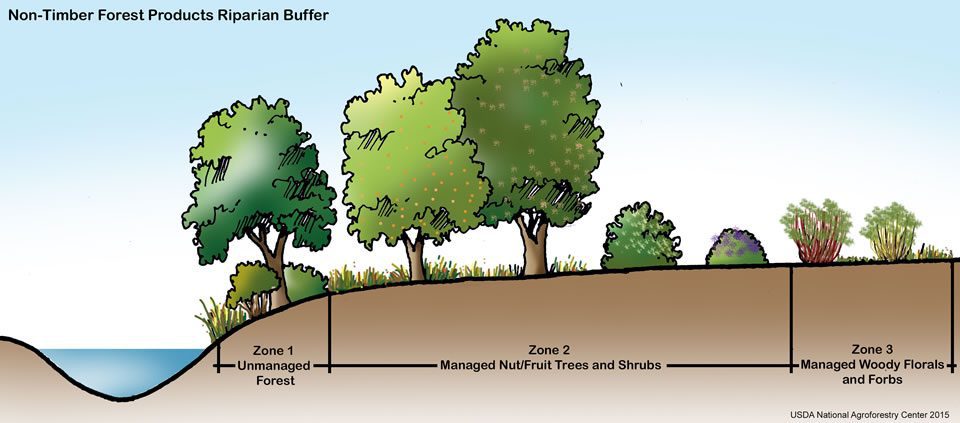
To adequately safeguard Chocolay Township's wetlands from development, we're proposing that the township adopt a 25-foot wetland buffer. The buffer would require any structure to be built at least 25 feet away from the edge of a wetland, effectively preserving wetlands in the township from development. The buffer would also require that any vegetation around a wetland must be left in its natural state, providing a natural transition from the surroundings.
Wetland buffers are commonly used by Michigan communities to protect natural resources, and would not interfere with state or federal wetland regulations. A wetland buffer would be efficient for the township to adopt, would require minimal extra administrative workload, and would align with Chocolay Township's existing land-use framework for shorelines, dunes, and other waterfronts.
Join us in asking Chocolay Township to adopt wetland buffer protections.
EGLE Wetlands Map Viewer. Department of Environment, Great Lakes, and Energy. (2026). https://www.michigan.gov/egle/maps-data/wetlands-map-viewer
US Department of Agriculture, US Forest Service. (n.d.). Riparian Forest Buffers. USDA National Agroforestry Center. https://www.fs.usda.gov/nac/practices/riparian-forest-buffers.php
What is a wetland? | US EPA. United States Environmental Protection Agency . (n.d.). https://www.epa.gov/wetlands/what-wetland
Zoning Ordinance. Charter Township of Chocolay. (2024). https://chocolay.gov/wp-content/uploads/2024/10/Zoning-Ordinance-through-34-24-01-10.18.24.pdf



