September 2, 2026
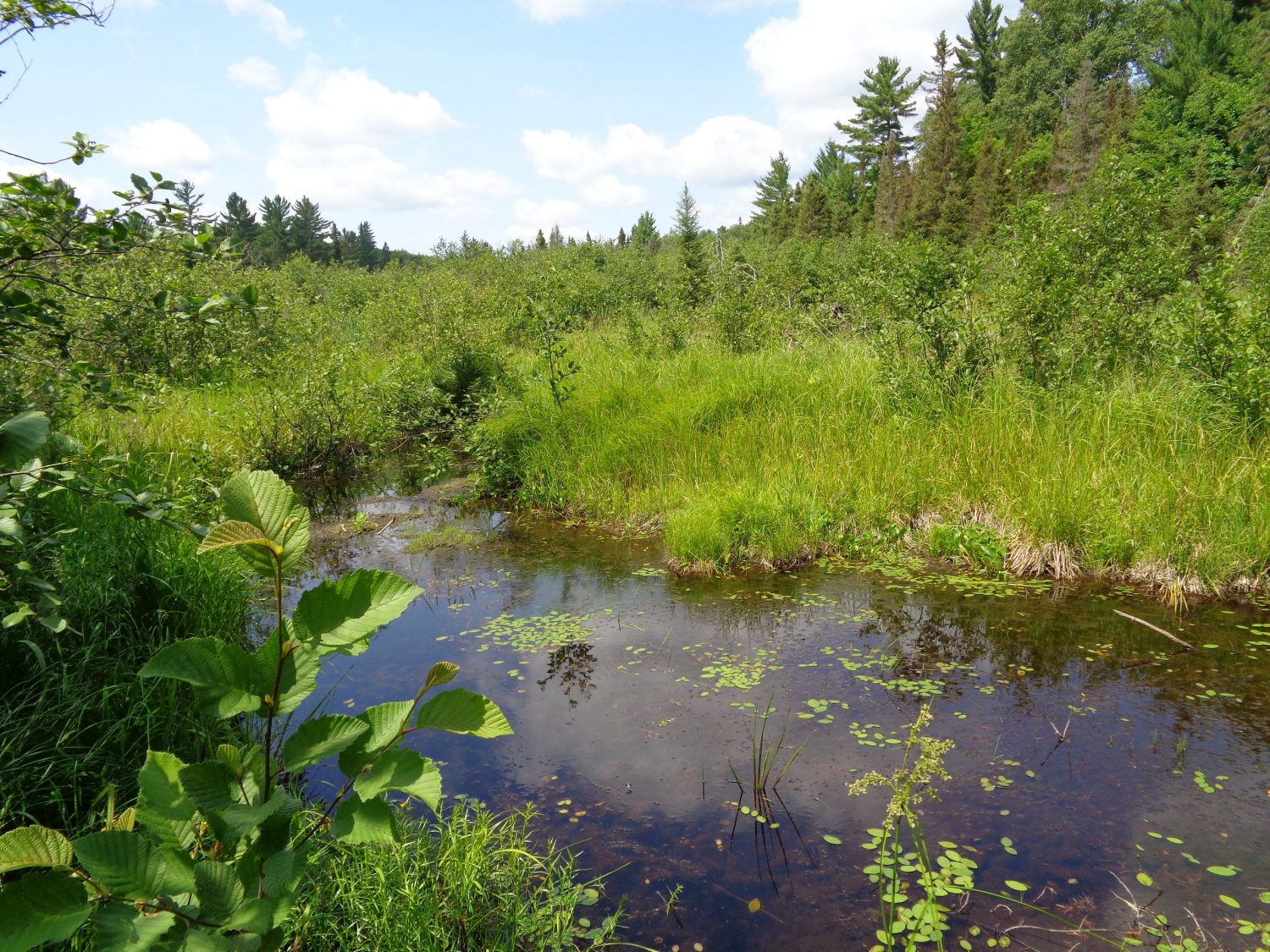
Michigan's wetlands are more than wet places on the landscape. They are natural infrastructure that store floodwater, recharge groundwater, provide wildlife habitat, and support some of our state's most valuable freshwater ecosystems.
For nearly five decades, Michigan has maintained a comprehensive and nationally-renowned wetland protection program. That protection is now at risk.
House Bill 5536, introduced by State Representative David Martin earlier this year, would gut Michigan's wetland protections. The bill passed the Michigan House of Representatives by 57-51 vote on June 4th, 2026, and now awaits consideration in the Senate Natural Resources and Agriculture Committee. If passed by the Senate and signed into law, HB 5536 could leave over a million acres of Michigan's wetlands without any state protections. Yes, you read that right.
Since 1979, Michigan has relied on a consistent framework for protecting wetlands based on several geographic and science-based factors. Currently, wetlands are regulated by the state if they are:
That means a permit from the state is needed to impact a wetland through dredging, draining, filling, excavating, or other activity. This framework acknowledges that wetlands are important to the health of our lakes, rivers, and streams, even if they don't have a direct surface-water connection.
HB 5536 would replace this clear and predictable framework with one that is much narrower and harder to carry out. The bill would require that wetlands must be adjacent or have a direct surface connection to federally-regulated "Waters of the United States" in order to be protected by the state.
In other words, a wetland that is physically separated from a lake, river, or stream—even if it is hydrologically connected via groundwater, seasonal flow, or its position within a watershed—could be deregulated. Let's be clear: HB 5536 is attempting to align Michigan with the disastrous decision made by the U.S. Supreme Court in Sackett v. EPA in 2023. Sackett significantly narrowed the Clean Water Act by requiring wetlands to meet the surface connection standard in order to receive federal protection. That decision stripped over half of the nation's wetlands from Clean Water Act protection.
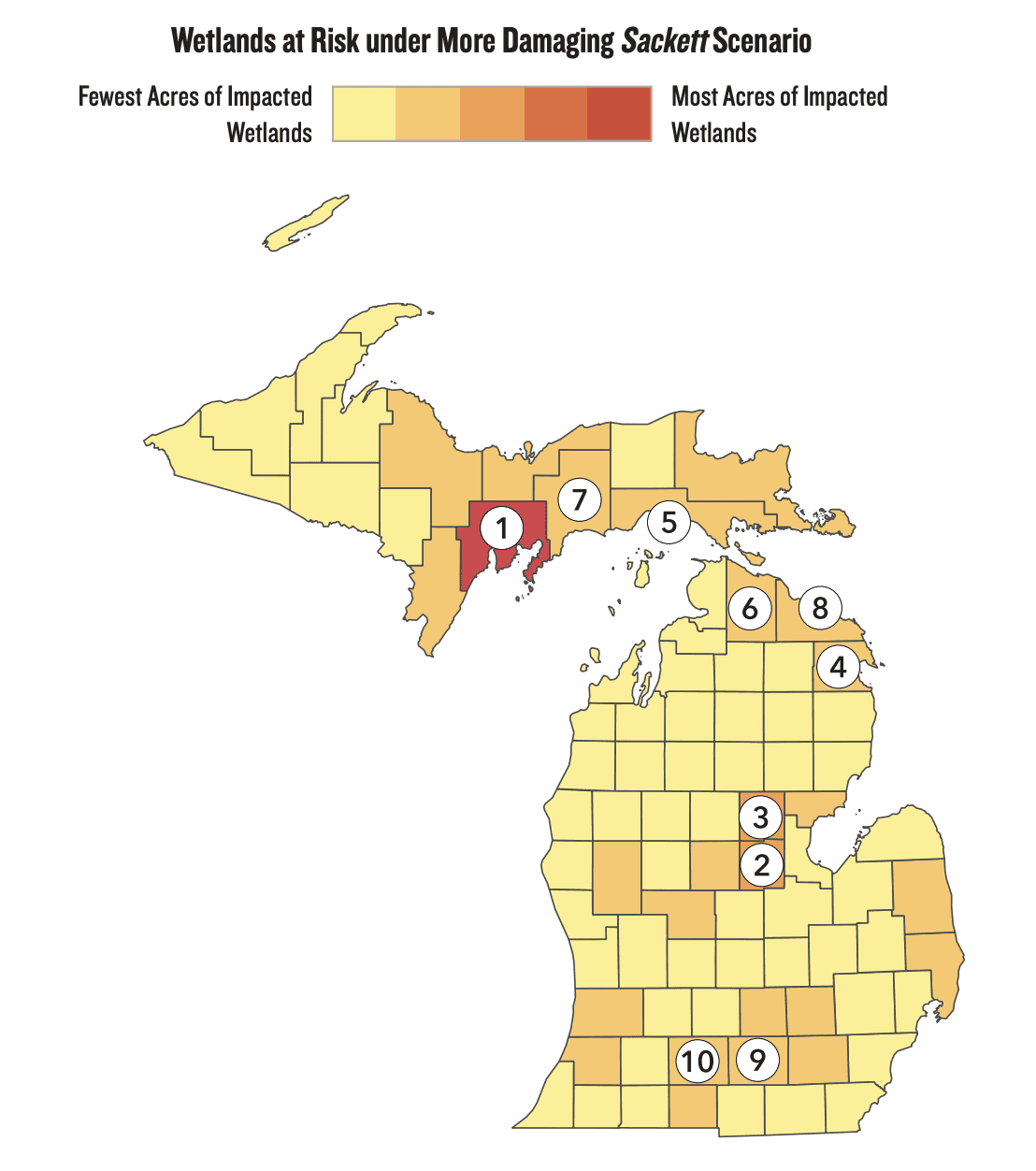
According to analysis by the Natural Resources Defense Council, 3 of the top 10 Michigan counties with the most wetlands at risk of deregulation under the Sackett standard are located in the Upper Peninsula; Delta County, Mackinac County, and Schoolcraft County. Over 200,00 acres of wetlands in Delta County alone could be deregulated if HB 5536 becomes law. Statewide, over a million acres of wetlands could be deregulated—leaving them vulnerable to draining, filling, and destruction without any permit or environmental oversight.
Supporters of HB 5536, including its sponsor Representative David Martin, argue that aligning Michigan's wetland protection program with federal standards would provide greater clarity and make regulation simpler for landowners and developers.
But federal rules on what "Waters of the United States" means has changed six times since 2015. Meanwhile, Michigan has has a consistent framework in place since 1979. Michigan's program already provides certainty and reliability to property owners and permit applicants.
HB 5536 also puts Michigan's entire wetland permitting authority into question. Michigan is one of only two states that have been granted authority to regulate activities relating to the Clean Water Act. In order to maintain this authority, Michigan's state-level regulations must be at least restrictive as the federal government's. Some experts have warned that significantly narrowing the state's program could risk Michigan's Clean Water Act authority. If that authority were lost, applicants could face both state and federal permitting processes instead of the streamlined system Michigan currently provides through the Department of Environment, Great Lakes, and Energy (EGLE).
Requiring wetlands to have a direct surface connection to "Waters of the United States" also means property owners and permit applicants will have to wait longer for permitting decisions to be made. Site-specific evaluations would have to determine whether a surface connection exists, and federal permitting timelines have already been extended by over a year.
HB 5536 is currently awaiting consideration in the Michigan Senate Natural Resources and Agriculture Committee. If you believe Michigan should maintain strong protections for its wetlands, now is the time to make your voice heard!
Take action by doing the following:
Michigan has spent nearly five decades building a wetland protection program that is one of the strongest in the nation.
We should not give up those protections simply because federal law has changed.
Our wetlands are still valuable—even when they don't have a visible connection to a river or lake. They still store water. They still filter pollution. They still recharge groundwater. They still provide habitat. And they still protect the health of our communities and Lake Superior.
Tell your state senator: oppose HB 5536 and protect Michigan's wetlands!
 Michigan Strategic Fund Approves Copperwood Funding
 Wetland Buffers: Protecting Michigan’s Wetlands Beyond Their Boundaries
 Do You Have a Wetland on Your Property? A Landowner’s Guide to Wetland Identification


